

Rooted in the Peaks
My Childhood Among the Mountains

Peaks of Otter | Sharp Top & Flat Top | View from Bedford, VA
The Peaks of Otter mountains have been and continue to be a part of my life. Growing up just over 10 miles from the Blue Ridge Mountains in Bedford County, Virginia, I always felt a deep sense of recognition and belonging whenever the Peaks of Otter came into view. Sharp Top, Flat Top, and Harkening Hill were not merely landmarks; they were symbols of home. Nestled high in the Blue Ridge Mountains, these peaks converge to form a valley, a land as rich in history as it is in natural beauty—a place that has drawn people for thousands of years.
Archaeological evidence suggests that Native Americans found this valley inviting at least 8,000 years ago. Its abundant natural resources—fresh water from springs and streams, diverse wildlife, and lush forests—made it ideal for living, hunting, and gathering. The Scottish pioneers, who began to populate this captivating region in the 1700s, also found great appeal in its steep, rugged terrain. By the 19th century, the Peaks had transformed into a hub of activity, drawing tourists with its raw beauty. During the mid-1800s, the village of Mons, which is Latin for mountain, had grown up around the Peaks of Otter. The community boasted 22 families, churches, schools, and mills amid tranquil surroundings. Because most families were large, the total population of the community was probably around 200 people.
Growing up, it was always a treat to get into the car and head to the top of the mountain. Whether it was for a Sunday afternoon drive, a picnic, a family reunion, or the challenge of climbing the strenuous 1.5-mile hike straight up to the summit of Sharp Top, it always resulted in a day filled with memories.


Sharp Top
Harkening Hill
Flat Top
Johnson Farm
The Peaks have been a backdrop not only to my life but also to the generations of the Johnson family that began with Stephen Johnson, born in the early 1730s. From my cherished memories of family picnics and mountain hikes, we now journey back to the origins of our family story. Stephen Johnson, the pioneer ancestor of our family, made his first mark when he married Susanna Pace in Goochland, Virginia. Let's travel back to these earlier days to discover how Stephen’s life unfolded in this new land, setting the stage for the generations that followed.
History of the Johnson Family
A Legacy Carved into the Peaks of Otter
Stephen Johnson
Pioneer of the Virginia Frontier
During the colonial period, pioneers from across the British Isles—including England, Scotland, Ireland, and Wales—were drawn to Virginia in search of economic opportunities, religious freedom, and a fresh start. Among them was Stephen Johnson, who arrived from Wales in the midst of the 18th century, beginning his legacy. Born in the early 1730s, much of his life before 1764 remains a mystery. That year, he married Susanna Pace in Goochland County; two years later, they welcomed their son, John.
Stephen Johnson
1730-1805
Married: Susanna Pace
1764
Life Span -75 years
As tensions with Britain over issues like taxation without representation escalated, Stephen and his family relocated along the James River to Amherst County sometime between 1767 and 1780. The reasons for their move are unclear, but they were part of a larger pattern of pioneers continually seeking new horizons and better prospects in the untamed beauty of Virginia. Despite their westward journey, the Johnsons found themselves still deeply entwined in the growing revolutionary fervor.
As Stephen Johnson’s story of settlement and survival on the Virginia frontier concludes, the narrative shifts to his son, John. Growing up amidst increasing tensions and revolutionary stirrings, John was preparing to forge his own path. Soon, he would take up arms in the Revolutionary War, marking his chapter in the fight for American independence.
John Johnson
From Revolutionary Soldier to Pioneer Settler
John Johnson was born in Goochland County, Virginia, in 1766. His life mirrored the turbulent times of a nation on the brink of revolution. At the young age of 15, motivated by a strong desire for freedom, John joined the fight for liberty, enlisting in Clark’s Illinois Regiment of the Virginia State Troops from 1781 to 1784.
John Johnson
10/18/1766 - 6/5/1856
Married: Penelope Harper
6/22/1789
Life Span - 90 years

After the war, John returned to Amherst County and married Penelope Harper in 1789. The call of the frontier soon beckoned John and Penelope to seek a new life in the Blue Ridge mountains at the Peaks of Otter, establishing a homestead in an area celebrated for its natural beauty. Here, they welcomed their son, Castleton, in 1790, marking a new chapter in this mountainous area.
The rugged terrain of the Blue Ridge Mountains isolated settlers from the more populous and developed areas of the colony. As a result, communities in the mountains often had to be self-sufficient, relying on subsistence farming, hunting, and gathering for survival. The remote nature of the Blue Ridge Mountains made it difficult for colonial authorities to exert control over the inhabitants. This often led to a sense of independence and self-reliance among mountain settlers, who were less subject to the direct influence of colonial governance.


Life in the Blue Ridge Mountains required settlers to adapt to the challenges of the rugged terrain and variable climate. They developed unique building techniques, such as log cabin construction, that suited the environment. Additionally, they cultivated crops and raised livestock that were well-suited to the mountainous conditions.
By 1810, John had made his mark in the community, appearing on the Bedford County census. It is suggested that John may have received land grants, possibly from Lord Fairfax, securing his family's place in the virgin territories of Virginia.
As John Johnson solidified his place among the pioneering settlers of Virginia, his legacy was poised to be carried forward by his descendants. His son, Castleton Johnson, would next bear the torch of the family's enduring spirit. Growing up amidst the rugged beauty and isolated independence of the Peaks of Otter, Castleton was shaped not only by the tales of his father's revolutionary valor but also by the land itself. As the nation found itself on the cusp of another conflict, the War of 1812, Castleton stood ready to defend his home and country, ensuring the Johnson legacy would once again intertwine with the fabric of American history.
Castleton Johnson
War Hero & Farmer
Castleton Johnson's story begins in 1790. Born into a world where the wilderness was not just a backdrop but a central character in the story of his life, Castleton's early years were marked by the profound influence of this rugged landscape and the right to remain independent in this new world.
Castleton Johnson
1790 - 7/2/1856
Married: Nancy Eubank
12/21/1814
Life Span - 66 years

At the age of 22, Castleton left home to serve in the War of 1812, a pivotal chapter in America's fight for a secure and independent place among the nations of the world. This war was about a young Nation, the United States pitted against the intimidating British Empire in a struggle for maritime rights and territorial integrity. Overall, while the War of 1812 did not result in a clear-cut victory for either side, the United States achieved its primary objectives of defending its sovereignty and asserting its independence. Castleton served with distinction as a private in the Battalion of Artillery, 38th Regiment, where he endured the trials and tribulations of war, until his honorable discharge in Norfolk, Virginia, in April 1814.
With the war behind him, Castleton returned to the mountains and married Nancy Eubank on December 21, 1814. Nancy had lived in the same area as the Johnsons. Together, they settled in the Peaks area on Harkening Hill and began to farm the land. On March 15, 1851, Castleton applied for the bounty land due him for his participation the War of 1812. In that same year Castleton purchased 200 acres of land for $200.00 on Harkening Hill.
In the fall of 1820, John Therone Johnson was born. A son who would carry forward the family legacy as the first owner of “The Johnson Farm.” This homestead, now a piece of living history on the Blue Ridge Parkway.

John Therone Johnson
Custodian of the Land
John T. Johnson was born on October 13, 1820. His life was reflective of a period marked by rapid expansion, the stirrings of civil unrest, and the enduring strength of community bonds. By 1841, at the age of 21, John, affectionately known as John T., married Mary Elizabeth Powell. They settled in the area and in 1852, they became the first owners of "The Johnson Farm" on Harkening Hill. This 102-acre tract, notable for its distinctive spring under a large rock known as Rock Spring.
John Therone Johnson
b. 10/13/1820 - d.3/31/1901
Reba, Botetourt, VA
Married: Mary Elizabeth Powell
October 25, 1841 - Bedford, VA
Life Span - 81 years

During the Civil War, the Mons Community, like many others across the nation, found itself divided in its loyalties. While many in the Peaks of Otter area were Union sympathizers, the Johnsons sided with the Confederacy. This complex and tumultuous period saw families and neighbors navigating the challenges of conflicting allegiances and the hardships of war.
According to a Historic Resources Study report prepared by the Appalachian Studies Program at Virginia Polytechnic Institute (now Virginia Tech), three members of the Johnson Farm family served the South during the war years. John T. Johnson, a staunch Confederate supporter, captured and turned in Confederate deserters. Two of his sons, Samuel and Charles, served as privates in Company I, 34th Regiment, Virginia Infantry. Charles was paroled at Appomattox Court House in 1865, while Samuel was wounded in May 1864 but appeared on the company muster roll for September and October of that year.
Despite the Johnson family's Confederate ties, the Mons Community as a whole saw little direct damage from the war. In 1864, when David Hunter, a Union General, and his troops passed through the Peaks area on their way to and from Lynchburg, residents took precautions by burying valuable possessions and hiding horses and cattle in the mountains. These measures, combined with the soldiers' restraint, spared the community from significant harm.

New Prospect Baptist Church
Women entered one door - Men entered the other
As a respected figure in both his church and the wider community, John T. saw no contradiction between his spiritual life and his distilling activities. In an era when distilling was legal, he took pride in crafting a pure, high-quality apple brandy that fetched a price of $1.50 per gallon.
Word of John T.'s exceptional brandy spread far beyond the Mons Community, drawing customers from across the region, especially during the holiday season. Many would make the journey to the Johnson Farm to secure their Christmas supply of this prized spirit.
In 1884, John T. sold his farm to his son Jason for $410 and moved to the south slope of Sharp Top and built a new home. The second generation of Johnsons took over the farm operation.
John T.’s life journey concluded on March 31, 1901. His legacy, deeply intertwined with the land he loved and the community he served, continues to resonate long after his passing. The Farm was maintained by the next 2 generations, and then was acquired by the Blue Ridge Parkway in 1941. Restoration efforts in the 1960s transformed it into an interpretive site that today offers visitors a glimpse into the past. The Johnson Farm, with its expansive gardens, fruit orchards, and the game-rich mountains, stands as a testament to the pioneer spirit of independence and harmony with nature.

Our focus now turns to Jason Lee, whose tenure at the farm would see it through new challenges and into a new century.
Jason Lee Johnson
From the Heart of the Mountains
In the fertile landscapes of Virginia's Bedford County, the life of Jason Lee Johnson began on January 26, 1846, in the Mons community. Despite being born with a clubfoot, Jason's life was defined not by his disability, but by his resilience and the robust bonds he fostered within his community and family.

Jason Lee Johnson
Born: January 26 1846 - Mons
Died: January 9, 1928
Married: Mary Jane Cottrell
February 4, 1868
Life Span - 82 years
The third of thirteen children, Jason grew up during the Civil War, an era that underscored the division within his community between Union and Confederate sympathizers. Because of his age and disability, Jason remained on the farm to help manage it while his brothers went off to war.
On February 4, 1868, Jason married Mary Jane Cottrell. Together, they raised seven children on a farm that expanded from the initial 102 acres purchased from Jason’s father to an additional 71 acres. This land was more than just a place of work; it was a legacy of perseverance and hope in post-war America.
Jason was a skilled carpenter and cobbler, and he took pride in raising fine horses. Despite his clubfoot, he innovated farming methods, such as sowing seeds from horseback, and diligently managed his crops and livestock, which included swine, poultry, and milk cows. His farm thrived, producing abundant harvests of eggs, butter, corn, oats, and potatoes.
Community involvement was central to Jason's life. He participated in communal apple butter stirrings each fall, events that combined hard work with celebration, producing not only apple butter but also lasting community bonds. To those not familiar with communal apple butter stirrings, early settlers were keen to preserve the abundance. Fresh apples could be stored in a cold house or sliced and dried, but apple butter, with its concentrated sugars, was a powerful way to extend the shelf-life before there was refrigeration. Each fall, families would assemble to make light of the hard work of putting up preserves. Jason's apples, grown on the slopes of Flat Top Mountain, reached markets as far away as England, showcasing the reach of their agricultural efforts.

Communal Apple Butter Stirrings

A devout member of the Suck Springs Baptist Church, located at the foot of the Peaks of Otter on Suck Springs Mountain, where there is a spring named Suck Spring, Jason embodied the values of religion, family, hard work, and community. These principles not only enriched his life but also provided his children with a foundation for success beyond the confines of mountain farm life.
Jason Lee Johnson passed away on January 9, 1928, leaving behind a rich legacy of resilience, community, and familial love. Buried in the churchyard of Suck Springs Church, his life remains a testament to the enduring human spirit and the deep connections that anchor us to our land and each other.

As we conclude the tale of Jason Lee Johnson, our focus shifts slightly across the rugged terrain of Sharp Top Mountain to its south side, where his son, John James Johnson, established his own homestead. This subtle yet significant move within the same mountainous area not only marks a new chapter in John James's life but also continues to embody the resilient spirit of the Johnson family, deeply rooted yet always adapting.
John James Johnson
Across the Mountain
In the shadow of the Peaks of Otter, near the steadfast Harkening Hill, John James Johnson carved out his own path. Born on February 8, 1873, on the family farm, he was the third of nine children. His early life on the farm set a foundational rhythm that paralleled the experiences of his ancestors. John ventured from his family’s lands to establish his legacy on the south side of Sharp Top Mountain, near Reba. There, he took over a historic homestead built in 1770 and farmed 154 acres, cultivating crops like potatoes, tomatoes, apples, and raising livestock.
John James Johnson
Born: February 8, 1873 - Bedford, VA
Died: September 20, 1919 - Orlando, FL
Married: Julie Develious Markam
12//21/1895
Life Span - 46 years
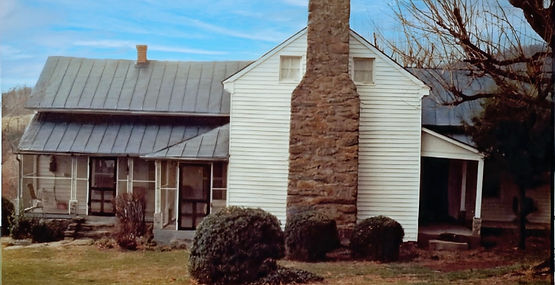
Home of John James Johnson as it stood in 1979
In 1895, John married Zulie Develious Markham, and their union was blessed with five children. However, tragedy struck with Zulie's death in 1909 at the tender age of 35. She died from childbirth complications and three months later their baby Zulia also died. Despite these losses, John's life on the farm persisted, and he remarried in 1910, adding another daughter to their family.

Living through the transition from the 19th to the 20th century, John witnessed significant technological innovations, yet his daily life remained deeply anchored in traditional farming and the rhythms of nature. In 1918, faced with economic challenges, John prepared to seek work at a cannery in Orlando, FL. Before leaving, he finalized his last Will and testament date, December 2, 1918, possibly prompted by concerns about his health. The Will specified that his three sons—Alfred, Leslie, and Earl—would equally divide the 154-acre farm and would additionally receive equal cash amounts. His daughters—Helen and Frances—were allotted larger sums of cash. With all children under 21, John appointed his brother, Dr. E.L. Johnson, as guardian for his four children with Zulie. The youngest daughter, Frances, was to stay with her mother and move back to Lowry, where The Markham family lived
Forty-nine days after signing his will, John suffered a fatal heart attack on January 20, 1919, at the age of 46. He was laid to rest in the family cemetery on his property at 1818 Owl Town Rd., Bedford County, VA. His final resting place symbolizes his enduring connection to the land.
After John James Johnson's sudden death, his young children found themselves without a guardian capable of maintaining the family homestead on the mountain. Faced with this dire situation, they were compelled to leave their ancestral land and seek a new beginning elsewhere, setting the stage for Leslie Jennings Johnson, Sr., to navigate the challenges of his early life away from the mountain that had defined his family for generations.

Willie (2nd wife) + Frances, Zulie (1st wife), Earl, John Johnson
Back Row - Alfred, Leslie & Helen. Picture taken in 1911.
Leslie Jennings Johnson Sr.
From Mountain to Meadow
Leslie Jennings Johnson, Sr. was born on June 28, 1904, in Bedford, Virginia, as the third child in a family of five. Tragedy marked his early years after the untimely death of his mother when he was just five years old, followed by his father's sudden passing from a massive heart attack. Orphaned at 14 in 1919, Leslie faced a pivotal moment that would reshape his life's path dramatically.
Leslie Jennings Johnson Sr.
B. June 8, 1904 - Bedford, VA
D. June 28, 1986 - Bedford, VA
Married: Kathleen Gray Davis
Date: 07/02/1932
Life Span: 82 years
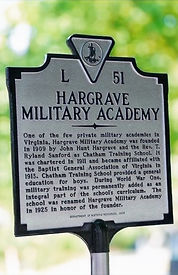

In the wake of his father’s demise, Leslie left the family's rugged mountain homestead to settle in the town of Bedford under the care of his uncle, Dr. E.L. Johnson. He was subsequently enrolled in a boys' academy, now known as Hargrave Military Academy in Chatham, Virginia. Founded during a turbulent era, Hargrave had integrated military training into its curriculum, a testament to the lingering influence of World War I.
Following his academic ventures, Leslie embarked on a business venture by investing in a soda shop partnership in Roanoke. This venture, however, ended in disappointment as his partner deceitfully took his share. This financial loss coincided with the beginning of the Great Depression in 1929, compounding his challenges. Nonetheless, Leslie's spirit remained unbroken, and in 1932, amidst economic scrutiny, he married Kathleen Gray Davis, a dedicated registered nurse. They were united in marriage by Leslie's Uncle Sirus Eubank in a warm, intimate ceremony at his home.

Soda Shop partnership.. Les is behind counter


Kathleen G. Davis Leslie J. Johnson, Sr.
Post-wedding, the couple settled initially in Bedford, renting an apartment from Ossie and Onnie Carter on Burks Hill. They attempted to seek better opportunities in Newark, New Jersey but returned within a year, drawn back by the familiar landscapes and familial connections of Bedford. Ultimately, Leslie purchased 27 acres from Onnie Carter. This land, fertile and inviting, became the foundation of their lifelong home. Here, Leslie fostered not just a family, but a small thriving farm, instilling the values of hard work and resilience in his children—Leslie Jr., Rose Marie, Eleanor, and David. The family cultivated chickens, hogs, milk cows, and maintained a substantial garden, with Leslie selling milk to the regional favorite, Sealtest Dairy.
Life-long home of Les & Kitty Johnson
Home built in 1935
Professionally, Leslie dedicated over four decades to the Piedmont Label Co. as a lithographic pressman, a testimony to his steadfast work ethic. His home resonated with love and devotion, with the family deeply rooted in their faith, all baptized in the Bedford Baptist Church.


It's interesting to note that a portion of Leslie's former farmland has become integrated into the National D-Day Memorial, which honors the town's significant contribution and sacrifice during World War II. The Bedford area was chosen because the loss of the “Bedford Boys” is widely thought to be the highest per capita sacrifice made by any American community on D-Day. For that reason, Congress warranted the Memorial’s establishment in Bedford, Virginia, recognizing Bedford as symbolic of American Homefront communities.
Leslie passed away on June 28, 1986, succumbing to complications from Alzheimer's disease, on his 82nd birthday. His life, intertwined deeply with the history and heart of Bedford, leaves a legacy of resilience and adaptability, echoing endlessly through both time and family.
As Leslie Jennings Johnson, Sr.'s story concludes, the narrative baton is passed to Eleanor Johnson Graham, his daughter who continues to weave the rich tapestry of their family’s history, strengthened by the values Leslie cherished.
Eleanor Davis Johnson Graham
Amidst the Blue Ridge Mountains' eternal embrace, my soul finds sanctuary, tranquility, and timeless wisdom. In these ancient peaks, I feel God's presence and discover a peace that grounds my spirit in beauty and majesty. ...Eleanor J. Graham